The capacitor is a small cylinder that gives your aircon’s motors the jolt they need to start turning. On older non-inverter aircons it is one of the most common electrical failures we see. It is cheap compared with the things people fear it might be, and it is also the one component inside an aircon that can still hurt you after the power is off.
This page covers where it sits and how to tell when it has failed. It also explains why it fails so often here, and why this repair is not a DIY job.

First: does your aircon have one?
This page applies to older non-inverter aircons. Those use a separate start and run capacitor for the compressor and fan motors, and that is the part that fails.
Newer inverter aircons, which is almost everything sold in Singapore today, do not have that separate capacitor. An inverter control board drives the compressor instead, so there is no cylinder to find or replace. If an inverter unit hums, clicks or will not start, the fault is somewhere else. Usually it is the control board, a sensor or the compressor itself, and it needs a proper diagnosis.
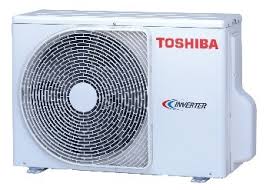
How to tell which you have: the word “Inverter” is normally printed on the indoor unit’s front panel or on the outdoor unit’s nameplate. If there is no inverter marking and the unit is an older one, then it is probably a non-inverter model and the rest of this page applies.
Where the capacitor is
On an older non-inverter split system:
- The main capacitor lives in the outdoor unit, inside the electrical compartment behind the service panel. It usually sits alongside the contactor and terminal block. It serves the compressor and often the outdoor fan.
- Some indoor units have their own small capacitor for the blower motor, tucked behind the control board cover.
- Portable units have theirs inside the casing near the compressor.
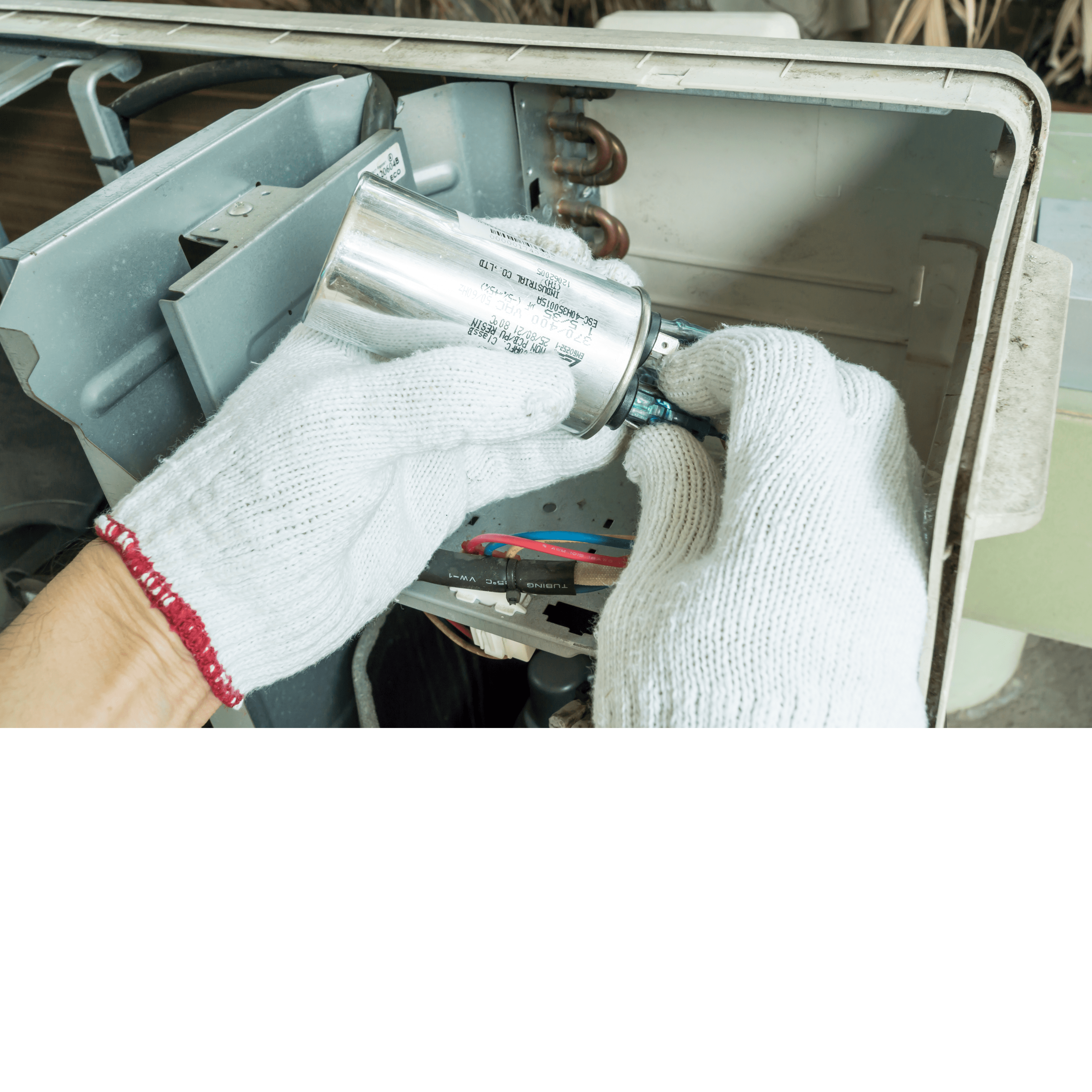
It looks like a metal or plastic cylinder, roughly the size of a drinks can or smaller, with two or three terminals on top and a rating printed on the side in microfarads (µF) along with a voltage.
Before you go looking: the part that matters
A capacitor stores electrical energy, and it can hold a dangerous charge long after you switch off and isolate the unit. That is its job. It does not drain itself just because you turned the aircon off at the wall, and the stored charge in an aircon capacitor is enough to injure you badly.
Technicians discharge them deliberately with a resistor before touching the terminals. There is no version of this where “being careful” substitutes for that step.
So: by all means look at the unit, and look up the rating printed on the side if you can see it without removing anything. Do not open the electrical compartment, and do not touch the terminals.
How to tell a capacitor has failed
The symptoms are fairly distinctive, which is why this is usually quick to diagnose:
- The outdoor unit hums but does not start. The motor is trying to turn and has no starting torque. This is the classic sign.
- A clicking sound, repeating, with nothing happening. The contactor is pulling in and the motor is failing to start.
- The outdoor fan does not spin, or starts only if nudged. (Do not nudge it.)
- The unit starts sometimes and not others, usually worse on hot afternoons as the capacitor weakens.
- The breaker trips when the system tries to start.
- Visible bulging or leaking on the top of the capacitor, if it happens to be in view.
Indoors the equivalent is a blower that hums without spinning, which we cover in why your aircon fan is not working.
Why they fail so often in Singapore
Capacitors are rated for a working life measured in operating hours at a given temperature, and both of those work against us here.
An aircon that runs eight to twelve hours a day, every day of the year, in an outdoor unit sitting in 32°C ambient on a west-facing ledge, is working a capacitor far harder than the same unit in a temperate climate. Add a dirty condenser coil, which raises the operating temperature further, and the component ages faster still.
This is one of the quieter arguments for keeping the outdoor coil clean: it is not only about efficiency, it is about how hot the electrical components next to it get.
Capacitor or compressor? The expensive question
Both produce the same headline symptom: the outdoor unit hums and refuses to start. The difference in cost is large, which is exactly why it is worth having diagnosed rather than guessed.
- A failed capacitor is a small part and a short job.
- A failed compressor is the most expensive component in the system, and on an older unit often tips the decision toward replacement.
A technician distinguishes them in minutes with a meter. Anyone quoting a compressor replacement over the phone, from a description of a humming noise, has not established which one it is. Our compressor guide covers what compressor failure actually looks like.
The honest order of things: check the cheap thing first.
Why this is not a DIY repair
Beyond the stored charge, there are three practical reasons:
- The replacement has to match. Capacitance and voltage rating both matter, and a close-enough part shortens the life of the motor it is starting.
- A failed capacitor is sometimes a symptom. If a motor is drawing more current than it should, it will cook the new capacitor too. Replacing the part without checking why it failed means doing it again.
- Electrical work in your flat has rules. Work that involves the fixed electrical installation is for licensed people, and an aircon fault that trips a breaker may not be only an aircon fault.
What we do about it
Our aircon repair service starts with a flat $87.20 troubleshooting visit, which is waived if you proceed with the repair. The technician measures the capacitor, checks the motor’s draw, and tells you which of the two problems you actually have before replacing anything.
We quote the repair itself on the spot once the fault is known, because component prices in Singapore move with supply and we would rather give you a real number than an invented one. All prices include 9% GST and repairs carry a 30-day labour warranty.
Frequently asked questions
Do inverter aircons have a capacitor?
Not the separate start and run capacitor this page describes. An inverter aircon drives its compressor from a control board, so a humming or non-starting inverter unit needs a board-level diagnosis, not a capacitor swap.
Where is the capacitor on an aircon?
In the outdoor unit’s electrical compartment behind the service panel, next to the contactor. Some indoor units have a separate smaller one for the blower motor.
What are the symptoms of a bad aircon capacitor?
The outdoor unit humming without starting, repeated clicking, a fan that will not spin, intermittent starting that gets worse in the heat, or the breaker tripping on start-up.
Can I replace an aircon capacitor myself?
We would strongly advise against it. Capacitors hold a dangerous charge after the power is off, they have to be discharged properly before anyone touches the terminals, and a mismatched replacement damages the motor it serves.
How long does an aircon capacitor last?
Shorter in Singapore than the rated life suggests, because of the running hours and the ambient heat. Keeping the outdoor coil clean helps, because a hot condenser means hotter electrical components.
Is a humming aircon always the capacitor?
No, and that is the point of diagnosing it. A failing compressor produces the same symptom at a very different cost. A meter settles it in minutes.
How much does it cost to fix?
The troubleshooting visit is $87.20, waived if you proceed. The repair is quoted on site once we know what failed, with a 30-day labour warranty.
Aircon humming and not starting?
WhatsApp us what it is doing: whether it hums, clicks, or does nothing at all, and whether the outdoor fan turns. We will tell you what it most likely is before sending anyone.
WhatsApp +65 8818 5781 · Call +65 8818 5781 · Book online
5.0★ across 2,300+ Google reviews · BizSafe Level 3 certified · 30-day labour warranty on repairs.