Looking to understand inverter aircons before buying, or wondering whether your old non-inverter unit is worth keeping? You’ve come to the right page. Inverter technology is now the default for every new aircon sold in Singapore, but most homeowners don’t actually understand what it means, why it matters, or whether they’re getting the real benefits from it.
This guide explains all of that in plain English with real Singapore numbers. At Lion City Aircon, we’ve serviced over 25,000 aircon units across Singapore since 2016 . every brand, every age, every condition. We see exactly how inverter and non-inverter units perform in real homes over real years.
Jump to your section:
- What Is an Inverter Aircon?
- How Inverter Compressors Actually Work
- Why Inverter Is Now the Default in Singapore
- Inverter vs Non-Inverter Direct Comparison
- Real Singapore Energy Savings
- What to Do If You Still Have a Non-Inverter Unit
- Inverter Quality by Brand in Singapore
- When to Upgrade Your Existing Aircon
- Frequently Asked Questions
What Is an Inverter Aircon?
An inverter aircon is one whose compressor can run at variable speeds, controlled by a variable-frequency drive (VFD). Instead of running at full power then shutting off completely, an inverter compressor speeds up and slows down smoothly to match the cooling demand of your room.
The word “inverter” doesn’t refer to a separate component you can see. It refers to the electronic control system inside the outdoor unit’s PCB that converts incoming AC electricity into variable-frequency power for the compressor motor. This allows precise control over how fast the compressor runs at any moment.
In practice, this means:
- When your room is hot, the compressor runs fast to cool quickly
- As the room approaches your setpoint, the compressor gradually slows down
- Once at setpoint, the compressor maintains a low steady speed instead of switching off
- Temperature stays steady without the constant on-off cycling of older aircons
Think of it like the cruise control on a car. A non-inverter is like accelerating to 80 km/h, releasing the pedal until you slow to 60, then accelerating again to 80. An inverter is like cruise control holding 70 km/h steadily. Both get you there, but cruise control uses less fuel and is more comfortable.
How Inverter Compressors Actually Work
To understand why inverter saves energy, you need to understand the difference in how the two compressor types operate:
Non-Inverter Compressor Cycle
- You set the aircon to 24°C in a 30°C room
- Compressor switches ON at 100% power immediately
- Compressor runs at full power continuously until room reaches 24°C
- Compressor switches OFF completely
- Indoor fan continues blowing room-temperature air for a bit
- Room slowly warms up from outside heat infiltration
- When room hits 25°C (1 degree above setpoint), compressor switches ON at 100% power again
- Cycle repeats every 10 to 20 minutes throughout operation
Energy waste happens at each switch-on (high inrush current) and from the inefficient on-off pattern.
Inverter Compressor Cycle
- You set the aircon to 24°C in a 30°C room
- Compressor starts at high speed (say 80% of max)
- Room temperature drops steadily
- As room approaches 24°C, compressor gradually slows to 40%
- Once at setpoint, compressor settles at 15 to 25% steady speed
- Maintains the temperature smoothly without switching off
- Only ramps up if conditions change (door opens, more people in the room)
No on-off cycling, no high-inrush startups, no fluctuating room temperature. The total electricity consumption ends up roughly 20 to 40% lower for the same cooling output over a typical Singapore household operating session.
Why Inverter Is Now the Default in Singapore
You probably can’t easily buy a new non-inverter aircon in Singapore right now. Here’s why:
Energy Efficiency Regulations
The Singapore National Environment Agency (NEA) enforces mandatory energy efficiency standards through the Mandatory Energy Performance Standards (MEPS) scheme. The minimum efficiency tier has been gradually raised. By the most recent revisions, the standards are essentially impossible to meet with conventional non-inverter technology. Manufacturers either build inverter units or don’t sell in Singapore.
Consumer Demand Shift
Singapore consumers became aware of the energy savings around 2010 to 2015. By 2018, inverter was the majority of new sales. By 2022, non-inverter was a niche product for very low-budget shoppers. Today, almost all retail aircons in Singapore (Daikin, Mitsubishi, Toshiba, Panasonic, Hitachi, LG, Samsung, Haier, Midea) are inverter by default.
Manufacturer Production Choices
Once the major brands committed to inverter technology, they consolidated their factories around it. Producing two product lines (inverter and non-inverter) for the same market doesn’t make economic sense once the inverter version is also the regulatory standard. New non-inverter aircon production for the Singapore market has largely stopped.
What Still Exists
You may encounter non-inverter aircons in:
- Older Singapore homes where the original installation was non-inverter (still working, not yet replaced)
- Some commercial and industrial applications where non-inverter is still specified for specific reasons
- Very budget-tier import retailers occasionally selling old stock
- Window-type aircons (a separate category) that may still be non-inverter
- Imported portable aircons from countries with different regulations
If you’re shopping for a new wall-mounted split aircon for a Singapore HDB, condo, or landed home, every model you’ll be quoted is an inverter. The decision isn’t inverter vs non-inverter anymore. It’s which inverter brand, what size, and what budget.
Inverter vs Non-Inverter: Direct Comparison
If you’re researching the difference (or comparing your old unit to a potential replacement), here’s how they actually differ across the factors that matter:
| Factor | Inverter | Non-Inverter |
|---|---|---|
| Energy efficiency | 20 to 40% less electricity | Higher consumption |
| Monthly cost (typical HDB) | $80 to $135 | $110 to $180 |
| Temperature consistency | Very stable, no fluctuation | Cycles between cool and warm |
| Noise level | Quiet, continuous low hum | Louder, audible on/off cycles |
| Indoor temperature feel | Smooth, no draft cycling | Noticeable temperature swings |
| Compressor lifespan | 10 to 15 years | 8 to 12 years |
| Upfront cost | $300 to $500 more per system | Lower initial price |
| Humidity control | Better (continuous operation) | Worse (cycling lets humidity creep back) |
| Startup electricity surge | Smooth ramp-up, no inrush | Brief high current at each startup |
| Mechanical stress on compressor | Lower (variable speed) | Higher (repeated full-power starts) |
| NEA energy rating | 4 to 5 ticks typical | 2 to 3 ticks typical (where available) |
| Average lifespan in Singapore | 10 to 12 years | 7 to 10 years |
Where Non-Inverter Used to Win
Historically, non-inverter had two genuine advantages:
- Lower upfront cost: Saved $300 to $500 on the purchase
- Simpler electronics: Fewer components to potentially fail in the PCB
Both arguments have weakened over time. Inverter electronics have matured (10+ years of mass production), so reliability is now comparable. The upfront cost difference is recovered within 12 to 18 months on typical Singapore usage through electricity savings. For anyone planning to keep the aircon for 5+ years, inverter wins on total cost of ownership.
Real Singapore Energy Savings
These are realistic Singapore figures based on what we see in customer bills. Your actual savings depend on your usage pattern, but these are typical:
HDB 4-Room Family Running Aircon 6 Hours Daily
- Non-inverter System 3: about $145 to $180 per month on aircon
- Inverter System 3: about $105 to $135 per month on aircon
- Monthly savings: $40 to $50
- Annual savings: $480 to $600
- Inverter price premium recovery: 8 to 12 months
Condo Owner Running Aircon Overnight (8 Hours)
- Non-inverter 12,000 BTU: about $110 to $135 per month
- Inverter 12,000 BTU: about $80 to $100 per month
- Monthly savings: $30 to $35
- Annual savings: $360 to $420
Heavy Use Household (Multiple Rooms, 8+ Hours Daily)
- Non-inverter System 4: about $230 to $290 per month
- Inverter System 4: about $160 to $210 per month
- Monthly savings: $70 to $80
- Annual savings: $840 to $960
See our complete electricity cost guide for detailed calculations with current SP tariffs.
What to Do If You Still Have a Non-Inverter Aircon
If your aircon was installed 8+ years ago, there’s a real chance it’s non-inverter. Common questions we get from customers in this situation:
Is It Worth Replacing While Still Working?
Honest answer: it depends on usage. The decision math is straightforward:
- New inverter unit cost: $1,800 to $3,500 depending on system size
- Monthly electricity savings: $30 to $80 depending on usage
- Payback period: 25 to 70 months (2 to 6 years)
If you’re a heavy user (multi-room household, running 6+ hours daily), replacement pays back in 2 to 3 years and saves money over the next 8 to 10 years. If you’re a light user (single room, 2 to 3 hours daily on weekends), payback stretches to 5 to 6 years and may not make financial sense.
If Your Non-Inverter Is Over 10 Years Old
Replace it. Non-inverter compressors over 10 years old are using 30 to 50% more electricity than their original spec because of normal compressor wear. Plus the failure risk is rising every year. You’re paying for the inefficiency now AND will eventually pay for replacement when it fails completely. Better to replace proactively.
If Your Non-Inverter Is 5 to 9 Years Old and Working Fine
Calculate your monthly electricity bill aircon share. Compare to what the same usage would cost on inverter. If you’re paying $50+ extra per month, replacement pays back fast. If only $20 to $25 extra, you can probably keep using until natural end of life.
If Your Non-Inverter Is Newer (Under 5 Years)
Keep using until it fails or efficiency degrades noticeably. Pre-emptive replacement of a relatively new unit rarely makes financial sense.
Servicing Matters More for Non-Inverter
If you’re keeping a non-inverter, service it every 3 to 4 months without fail. Non-inverter efficiency degrades faster than inverter when neglected. A poorly-maintained non-inverter can use double the electricity of a clean one.
Inverter Quality by Brand in Singapore
All major brands sold in Singapore offer inverter aircons. Quality and reliability differ. Across thousands of jobs in real Singapore homes, here’s what we see:
Top Tier (Best Reliability + Efficiency)
- Mitsubishi Electric (Starmex): Most reliable inverter, quietest operation, premium price. See our Mitsubishi error codes guide.
- Daikin: Excellent inverter technology, strong commercial heritage carrying into residential. See Daikin error codes guide.
Strong Mid-Tier (Good Value)
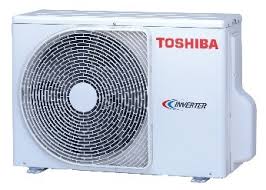
- Toshiba: Strong technology (Toshiba Carrier joint venture), lower price than Mitsubishi/Daikin, modern design. See Toshiba error codes guide.
- Panasonic: Reliable inverter compressors, good widespread service network. See Panasonic error codes guide.
- Hitachi: Well-engineered inverters, slightly less common in Singapore residential. See Hitachi error codes guide.
Budget Tier (Acceptable Quality, Lower Price)
- LG: Decent inverter tech, design-led aesthetics. See LG error codes guide.
- Samsung: Reasonable performance, Wi-Fi connectivity features. See Samsung error codes guide.
- Haier: Improved significantly in recent years, competitive pricing. See Haier error codes guide.
- Midea: Strong value, growing market presence in newer Singapore homes. See Midea error codes guide.
For a direct brand comparison see our Daikin vs Mitsubishi and Toshiba vs Mitsubishi guides.
When to Upgrade Your Existing Aircon
Even if your current aircon is already inverter, replacement might still make sense in certain situations.
Clear Signs You Should Replace
- Unit is 10+ years old, regardless of brand or type
- Electricity bills have risen 30%+ over 2 years with no usage change
- Repair costs over the last 2 years have exceeded $500
- Cooling performance has noticeably degraded
- Unit is increasingly noisy
- Refrigerant top-ups are needed more than once per year
- Replacement parts (especially compressor or PCB) would cost over $700 individually
Reasons NOT to Replace Yet
- Unit is under 6 years old and working fine
- You service quarterly and bills are stable
- You’re planning major home renovation within 2 years (do everything together)
- Existing unit just had a major repair (capacitor, fan motor)
If You Decide to Replace
Go inverter, 5-tick rated, properly sized for the room (we recommend specs based on your room dimensions, see our aircon sizing guide). Don’t oversize “just to be safe” . oversized aircons cycle on/off too fast and are less efficient than properly sized units. Don’t undersize to save money . they run continuously at full speed and use more energy.
Frequently Asked Questions
Is inverter aircon really worth the extra money in Singapore?
Yes, for almost any usage pattern. The price premium ($300 to $500) is recovered within 12 to 24 months on typical Singapore usage. Over the 10 to 12 year lifespan, you save $4,000 to $7,000 in electricity. The only case where inverter doesn’t pay back is occasional weekend-only use of a single room.
Can I still buy a non-inverter aircon in Singapore?
Almost no new wall-mounted split aircons are non-inverter anymore. You might find a window-type unit or imported portable aircon that’s non-inverter, but for standard residential installations, all current models are inverter. Singapore’s energy efficiency regulations effectively require it.
How do I know if my current aircon is inverter or non-inverter?
Check the outdoor unit’s nameplate sticker. It will either explicitly say “INVERTER” prominently, or you’ll see specifications mentioning “DC Inverter,” “Hyper Inverter,” or “All-DC Inverter.” If those words don’t appear and the unit is over 10 years old, it’s likely non-inverter. We can confirm during a service visit.
Does inverter aircon save electricity even when the room is already cold?
Yes, and that’s where most of the savings come from. Non-inverter units waste energy on the on-off cycle even when maintaining a cool room. Inverter units run at low steady speeds, using minimal electricity while keeping temperature stable.
Are inverter aircons more reliable than non-inverter?
Surprisingly yes, despite more complex electronics. The inverter design puts less mechanical stress on the compressor (variable speed instead of repeated full-power starts), which extends compressor life by 2 to 3 years on average. The PCB electronics are the main potential failure point, but modern inverter PCBs are mature technology with low failure rates.
Why is my inverter aircon using more electricity than expected?
Common causes: dirty filters or coils (forces compressor to work harder), refrigerant leak (compressor runs longer per cycle), aging compressor (efficiency degrades), incorrectly sized for the room (oversized cycles too short), or settings issue (setpoint too low, fan at maximum constantly). A diagnostic visit identifies the cause. See our why your bill is suddenly higher guide.
Do all inverter aircons have the same efficiency?
No. Look at the NEA tick rating. 5 ticks is most efficient, 4 ticks is decent, 3 ticks is the lower end of inverter. All are still better than non-inverter, but a 5-tick uses 15 to 20% less electricity than a 3-tick of the same BTU rating.
Can I retrofit my existing non-inverter aircon to inverter?
No. The compressor, PCB, refrigerant system, and indoor electronics are all fundamentally different. Converting an existing non-inverter to inverter would cost more than buying a new inverter aircon outright. If you want inverter, replace the unit.
Do inverter aircons cool faster than non-inverter?
Marginally, in most cases. Both can run at full compressor power initially. The inverter advantage isn’t speed; it’s efficiency at maintaining the temperature once reached. For initial cooling of a hot room, the two are similar.
Is inverter aircon better for the environment?
Yes. Lower electricity consumption translates to lower carbon emissions over the aircon’s lifetime. Additionally, modern inverter units use refrigerants (R32) with lower global warming potential than older R22 refrigerant used in many non-inverter units. Total environmental impact is significantly lower for inverter.
Need Help Choosing or Servicing Your Aircon?
If you’re shopping for a new aircon, deciding whether to keep your old one, or noticing your existing unit isn’t performing the way it used to, we can help with an honest assessment.
WhatsApp +65 8818 5781 with your unit’s age, current performance, and any concerns. 25,000+ jobs done since 2016, 5.0★ across 2,000+ Google reviews, BizSafe Level 3 certified. Same pricing for HDB, condo, and landed properties.
No upselling. No scare tactics. If your current aircon is fine for another 3 to 5 years, we’ll tell you. If replacement makes economic sense given your usage, we’ll show you the math.
WhatsApp Lion City Aircon · Call +65 8818 5781 · Book online
Related reading: How much electricity aircon uses · 7 ways to cut electricity bills · Which aircon mode saves electricity · Best aircon temperature for Singapore · What aircon size do I need · How aircon compressor works
If you would rather have a professional handle this, our aircon repair in Singapore service covers exactly this kind of job.